

How Can Color Change The Mood Of A Painting?
Before we fully recognize the subject or understand the story, color can make an artwork seem peaceful, joyful, lonely, energetic, mysterious, or even unsettling.
Artists use HUE, brightness, saturation, temperature, and contrast to shape that emotional response. Warm colors such as red, orange, and yellow often feel energetic, inviting, passionate, or intense, while cooler blues, greens, and purples can feel calm, distant, reflective, or melancholy. Bright, saturated colors can make a painting feel lively and immediate, while muted colors often create a quieter, softer, or more nostalgic feeling.
VALUE, which is the lightness or darkness of a color, also matters.
A painting filled with pale colors and soft light may feel airy and hopeful, while deep shadows and dark tones can create drama, tension, or sadness. Artists can also place contrasting colors beside one another to make a scene feel more vibrant or visually intense.
Famous Artists Who Used Color to Create Emotion:
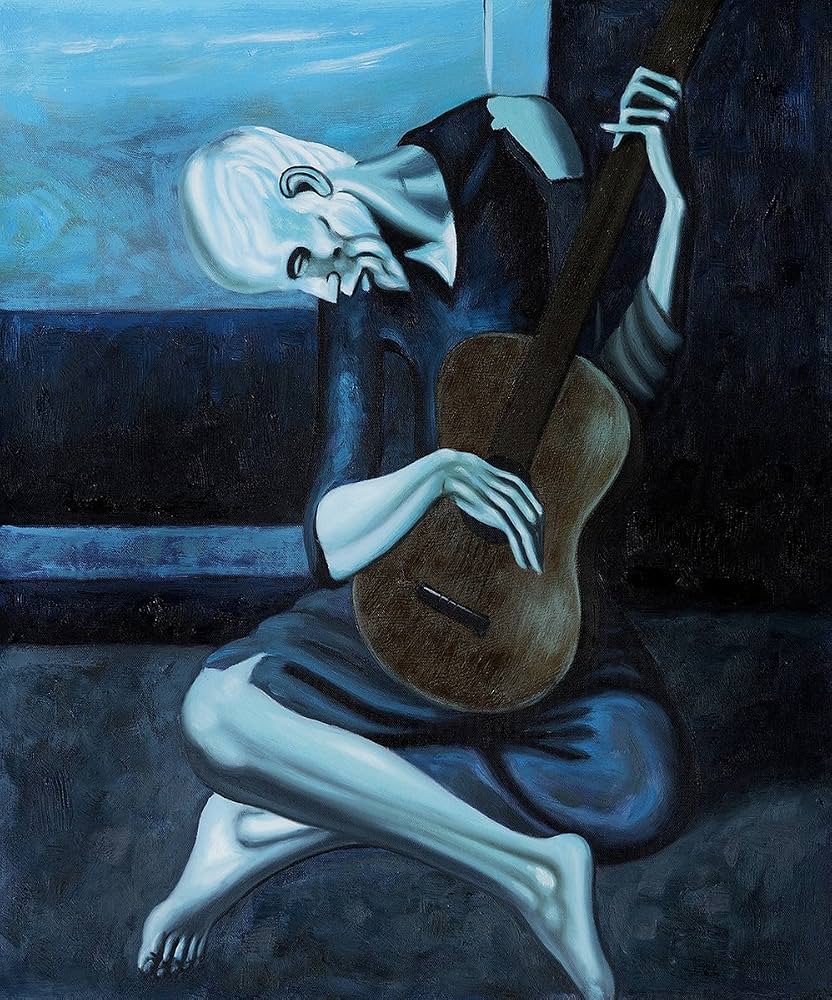
Pablo Picasso — The Old Guitarist (1903–04)
Picasso's nearly monochromatic palette of cold blues and blue-grays immediately gives the painting a feeling of sadness, loneliness, and hardship. The thin, hunched musician already appears vulnerable, but the overwhelming blue palette makes that emotion even stronger. The warm brown of the guitar stands out against the blue surroundings, drawing our attention to what may be the man's one source of comfort.
Vincent van Gogh — The Starry Night (1889)
Van Gogh filled the night sky with intense blues, swirling turquoise, and brilliant yellow stars. Instead of making nighttime feel simply dark and quiet, the strong contrast and energetic color make the sky feel alive, emotional, and almost restless. The colors help turn an ordinary nighttime landscape into something dramatic and dreamlike.
Edvard Munch — The Scream (1893)
The fiery oranges and reds of the sky clash dramatically with the dark blues and greens below. Those unnatural, intense colors contribute to the painting's immediate feeling of anxiety and uneasiness. Even before focusing on the famous screaming figure, the color palette tells us that something feels wrong.
Claude Monet — Water Lilies series
Monet often used gentle blues, greens, violets, and pinks to capture changing light on his garden pond. Rather than creating strong drama, these closely related colors tend to make the paintings feel peaceful, atmospheric, and meditative. Color becomes less about describing objects precisely and more about capturing the experience of light and nature.
Henri Matisse — The Red Room (Harmony in Red) (1908)
Matisse covered much of this painting in an intense, saturated red rather than using realistic colors. The result feels bold, warm, decorative, and full of energy. Instead of creating the illusion of a realistic room, the color itself becomes one of the main subjects of the painting.
Mark Rothko — Color Field Paintings
Rothko reduced painting largely to large areas of color, allowing viewers to respond directly to their relationships. Deep reds, purples, blacks, oranges, and other tones can make his works feel peaceful, solemn, intimate, or overwhelming. His paintings demonstrate just how powerfully color alone can create an emotional experience.
Color doesn't have one universal meaning; A blue painting will not make every person feel exactly the same way. Our memories, culture, experiences, and even the colors surrounding a painting influence our reactions. Still, artists have long understood that changing a palette can completely change how we experience an image.
The next time you look at a painting, try imagining it in a completely different set of colors. Would Picasso's The Old Guitarist feel as lonely if it were painted in bright oranges and yellows? Would The Scream feel as unsettling beneath a soft pastel sky? Color doesn't simply decorate a painting... it helps tell us how the painting feels.
At Pinot’s Palette, color is part of the fun! Each painting offers a chance to work with a beautiful range of shades, learn how colors blend and complement one another, and see how small choices can completely change the mood of your artwork. Whether you follow the instructor’s palette or add your own creative twist, a painting class is a relaxing and entertaining way to explore color, enjoy time with friends, and create something that feels uniquely yours.